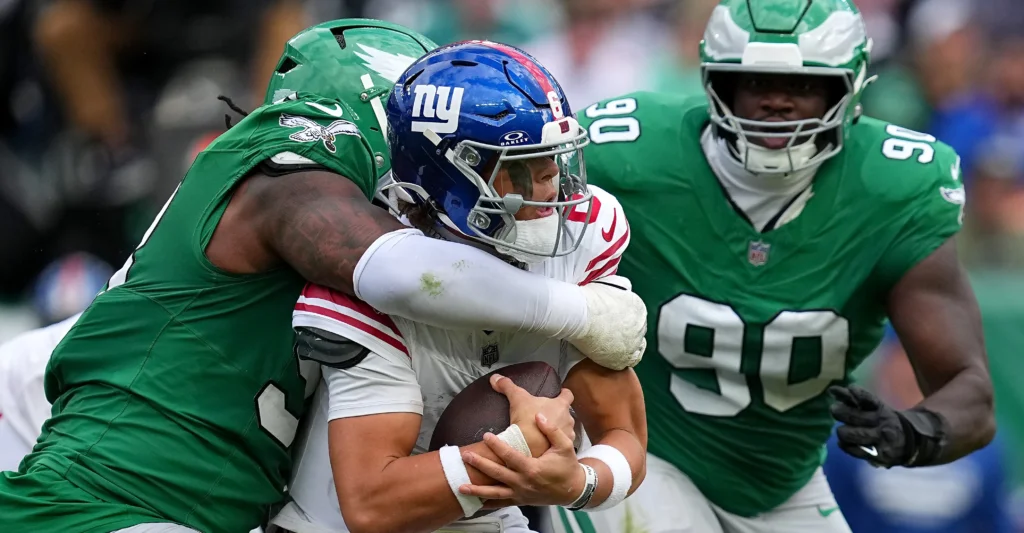
Introduction to the Rivalry
The rivalry between the Philadelphia Eagles and the New York Giants is one of the most storied in the National Football League (NFL), marked by fierce competition, unforgettable moments, and a shared history that dates back to the 1933 season. This longstanding contest not only highlights the geographical proximity of the two franchises but also underscores their cultural significance within the sport. Matchups between these two teams often come with high stakes, amplified by passionate fan bases that eagerly anticipate these encounters every NFL season.
Throughout their history, the Eagles and Giants have faced each other numerous times, with each game packed with intensity and dramatic turns. The significance of these games extends beyond the pursuit of victory, as they often determine playoff positions and playoff seeding, making them crucial for both teams’ trajectories as they move through the NFL season. Notably, the rivalry has produced iconic moments that resonate not only with fans but also within the annals of NFL history. From exhilarating comebacks to monumental upsets, each contest shapes the narrative of this rivalry.
The thrill of the Philadelphia Eagles vs New York Giants matchup is further magnified by memorable individual performances, where players rise to the occasion to deliver standout stats that often serve as determining factors in the game outcome. These match player stats provide invaluable insights into the athletes’ capabilities, revealing the impact of each player on their respective teams. As we delve deeper into the player statistics from these clashes, it becomes apparent how individual performances contribute to the ongoing saga of this great rivalry. By examining how these stats influence each game, we can appreciate the magnitude of their history and the fervency of their encounters.
Key Player Performances
In the recent matchup between the Philadelphia Eagles and the New York Giants, several key players emerged with standout performances that significantly influenced the game’s outcome. Analyzing the Philadelphia Eagles vs New York Giants match player stats provides a clearer picture of how individual efforts contributed to their respective teams.
For the Eagles, quarterback Jalen Hurts delivered a remarkable performance, throwing for over 320 passing yards while completing 28 of his 38 attempts. His ability to connect with star receiver A.J. Brown was pivotal; Brown accumulated 140 receiving yards and two touchdowns, demonstrating exceptional skill and chemistry with Hurts. Additionally, Hurts contributed on the ground with 60 rushing yards, showcasing his dual-threat capabilities. Defensively, the Eagles’ linebacker, T.J. Edwards, recorded ten tackles, with several coming in critical moments, helping to disrupt the Giants’ offensive rhythm.
On the other side of the field, the Giants’ quarterback Daniel Jones struggled against the Eagles’ formidable defensive unit. He managed just 210 passing yards, with one touchdown and two interceptions, reflecting the pressure applied by the Eagles’ pass rush. However, running back Saquon Barkley stood out with his impressive performance, rushing for 90 yards and securing an additional 50 receiving yards. His versatility kept the Giants somewhat competitive throughout the game. Moreover, defensive end Leonard Williams made a significant impact, registering two sacks and a forced fumble, highlighting his role in the Giants’ defense.
Ultimately, the performances of these players, as reflected in the Philadelphia Eagles vs New York Giants match player stats, were crucial in determining the outcome of this rivalry game, making it a notable clash between these two teams.
Statistical Comparison: Eagles vs Giants
In analyzing the Philadelphia Eagles vs New York Giants match player stats, we find that both teams showcased varied strengths during their face-offs. For the Eagles, the offensive performance centered around their quarterback, who threw for over 300 yards in several games, marking a significant increase in passing yardage compared to previous seasons. His touchdown-to-interception ratio further incentivized their offensive strategies, leading to increased scoring opportunities.
Contrastingly, the Giants’ offense demonstrated a balanced approach, leveraging a combination of passing and rushing metrics. The running back for the Giants accumulated significant yardage, averaging over four yards per carry, which was crucial in controlling the tempo of the game. Additionally, their wide receivers consistently gained separation, attributing to the quarterback’s efficient completion percentage in the backdrop of pressure.
Defensively, the statistics reveal a competitive edge for the Eagles, as evidenced by their sack totals and interceptions. Philadelphia’s defensive line has consistently ranked high, leading to notable pressure on opposing quarterbacks, affecting their passing performance as recorded in the Philadelphia Eagles vs New York Giants match player stats. The Giants, however, countered with a resilient secondary, showcasing a solid number of pass deflections and coverage statistics that held the Eagles’ receivers relatively in check during pivotal moments.
A summary table below illustrates the comparative player stats, emphasizing key metrics such as yards gained, touchdowns scored, and defensive stops throughout their meetings:
This comparative analysis of the player statistics from recent Eagles and Giants encounters not only highlights individual performances but also illustrates how these statistics contribute to the broader narrative of their rivalry.
Implications for Future Matchups
The player statistics from the recent Philadelphia Eagles vs New York Giants match serve as a crucial barometer for understanding potential outcomes of future encounters between these two rivals. Analyzing individual performances allows both teams to evaluate their strengths and weaknesses, impacting strategies in upcoming games.
For instance, high-performance metrics from key players, such as quarterbacks, running backs, and receivers, shed light on offensive capabilities and the effectiveness of defensive strategies. If the Eagles’ quarterback displayed exceptional accuracy and decision-making, this could indicate that the Giants may need to bolster their pass rush or adjust their secondary coverage in future matchups to counteract this threat. Conversely, any standout performances by the Giants might instill confidence and influence the Eagles’ game plan.
Injuries also have a significant role in how these statistics shape future games. If a pivotal player from either team is sidelined, it can drastically alter their gameplay. For instance, if a starting wide receiver for the Eagles faces a long-term injury, it may lead to a more conservative offensive strategy, as backup players could be less effective. Likewise, depth charts and roster changes can provide an insight into how each team might adapt. A newly acquired player or a returning injured star could shift the balance of power significantly, affecting overall team momentum.
Statistics not only reflect past performance but also help coaches implement targeted training and strategic adjustments. Understanding player tendencies, successful formations, and breakdowns during the Philadelphia Eagles vs New York Giants match will be essential in how both franchises prepare for their next confrontation. Ultimately, the ongoing analysis of these player stats will be integral in shaping the narrative of this storied rivalry moving forward.
