What is the Octordle Sequence?
The octordle sequence represents a distinctive format within the diverse ecosystem of word puzzle games. Its primary objective is to challenge players to deduce multiple words simultaneously based on a shared set of letters and clues. The name “octordle” itself is derived from the prefix “octo-” signifying eight, indicating that players are tasked with solving eight different words at once, while concurrently interacting with the same letter grid.
To engage with the octordle sequence, players are presented with a puzzle board that consists of a series of empty letter slots corresponding to the eight target words. The players start by entering a guess, and the game feedback mechanism provides responses for all eight puzzles at the same time. Each letter that players input will be highlighted based on its correctness in relation to each individual word, thus giving players clues about which letters might fit where.
Familiarizing oneself with the cornucopia of terminology associated with the octordle sequence enhances gameplay comprehension. For instance, terms like “letter grid,” “feedback mechanism,” and “target words” are vital in understanding how to strategize effectively. Moreover, the interaction between players and the sequence can be strategic, as one must manage which words are more obscure within their guesses and when to take educated risks based on partial information.
Ultimately, mastering the octordle sequence necessitates patience and practice, as players learn to navigate the mechanics and develop techniques to efficiently identify potential words from the puzzles presented. This foundational understanding sets the stage for successfully tackling future challenges within the game.
Strategies for Success in the Octordle Sequence
Success in the octordle sequence requires not just guesswork but also strategic thinking and analytical skills. One efficient approach to excel in this puzzle game involves narrowing down your guesses based on the feedback provided after each attempt. Start with words that contain commonly used letters and vowel placements. For example, utilizing words like “audio” or “stone” can reveal critical information about the letters that exist within the target words.
Pattern recognition plays a crucial role in the octordle sequence. Once you have a few correct letters, analyze their positions and identify potential word structures that could accommodate these letters. By employing a systematic approach to identify letter placements and combinations, players can create a mental framework to visualize multiple possible word outcomes. Keeping track of the letters you’ve confirmed as being part of any of the target words is beneficial, as it reduces the number of possibilities you have to consider with subsequent guesses.
Logic is another essential tool in navigating the octordle sequence. As you eliminate impossible words based on previous feedback, refine your guesses to incorporate only those letters that have not yet been ruled out. Use the process of elimination to discard words that share letters with the confirmed incorrect guesses. This logical narrowing of choices maximizes your chances of identifying correct words in fewer attempts.
For example, if you initially guess “plate” and discover that the letters “p” and “t” are not part of any word, avoid further guesses that contain these letters. Instead, transition to words that utilize letters previously shown to be correct. Implementing these strategies not only enhances gameplay but ultimately leads to mastering the octordle sequence. By developing a blend of analytical skills and proficient guessing techniques, players can enjoy more success and satisfaction with each game.
Common Challenges in the Octordle Sequence and How to Overcome Them
The octordle sequence presents a range of challenges that can hinder a player’s progress, particularly for those who are new to the game. One common challenge is the sheer number of possible word combinations. Unlike traditional word puzzle games, octordle involves guessing multiple words simultaneously, which can be overwhelming. Players may struggle to discern which letters are most useful, leading to suboptimal guesses. To overcome this, players should focus on identifying common letter patterns and word structures early in the game, allowing them to form educated guesses in their attempts.
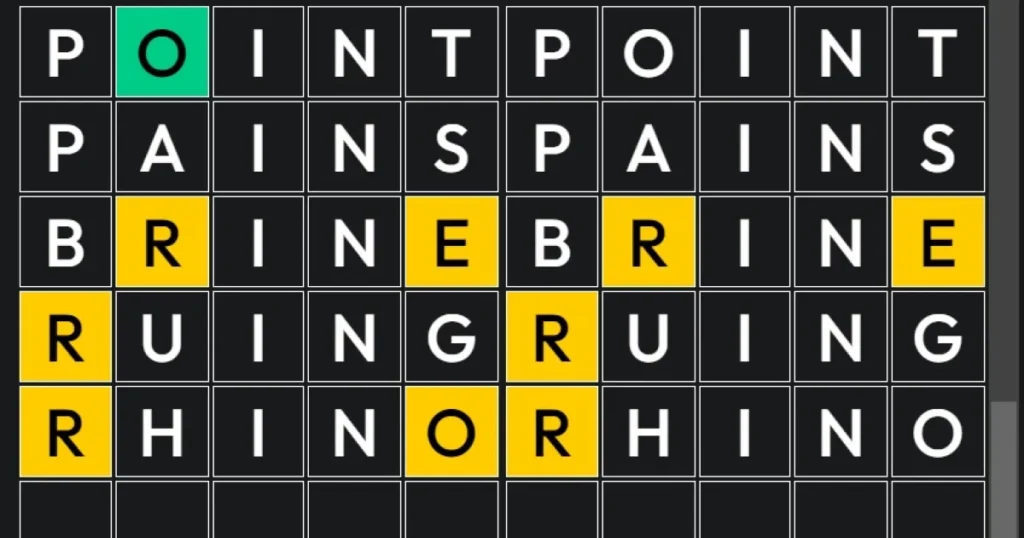
Another frequent pitfall is misinterpretation of feedback. In octordle, players receive immediate visual feedback on their guesses, indicating correct letters and their positions. However, new players may misread this information, leading to repeated mistakes. It’s advisable to take notes during gameplay to track successful letters and positions systematically. This approach facilitates better decision-making as the game progresses, enabling players to link their guesses more effectively to previous attempts.
Lack of vocabulary can also hinder performance in the octordle sequence. Players may find themselves stuck simply due to an inability to recall words that fit the given criteria. To mitigate this challenge, regular practice with word lists or engaging with word puzzles outside of octordle can improve a player’s vocabulary. Furthermore, knowledgeable players recommend adopting a strategic approach by focusing on high-frequency words or common five-letter English words, enhancing one’s chances of success.
Ultimately, understanding these common challenges allows players to approach the octordle sequence with greater confidence. By implementing the suggested strategies, players can enhance their gameplay experience and increase their chances of success in this engaging word puzzle game.
The Evolution of the Octordle Sequence and Its Community
The octordle sequence originated as an innovative extension of traditional word puzzle games, emerging in the early 2020s. The fundamental concept revolves around solving multiple words simultaneously, providing players with a more challenging and multifaceted experience. Initially inspired by simpler formats, this innovative approach quickly captured the attention of puzzle enthusiasts, who appreciated the increased complexity and engagement levels offered by the octordle sequence.
As the game gained popularity, a vibrant community began to form around it. Players took to social media platforms, including Twitter and Reddit, where they shared strategies, tips, and excitement about their daily octordle attempts. Dedicated forums emerged, allowing players to discuss the nuances of the game, seek help from others, and even participate in friendly competitions. This sense of community contributes significantly to the game’s appeal, fostering camaraderie among players who share a common goal of mastering the sequence.
In terms of community events, many enthusiasts have organized contests and tournaments that celebrate the skills involved in navigating the octordle sequence. These gatherings, both virtual and in-person, have allowed players to showcase their talents, while also serving as platforms for newcomers to learn from more experienced players. As such, the community not only promotes enjoyment of the game but also helps simplify the learning curve for new participants.
Looking towards the future, there are promising developments on the horizon for the octordle sequence. Game designers are constantly exploring new features tailored to enhance player experience, such as advanced hints, multiplayer modes, and even seasonal updates that introduce new puzzle formats. These potential updates could further strengthen the community while keeping the game fresh for long-time players. As the octordle sequence continues to evolve, it is poised to maintain its status as a captivating challenge for word puzzle enthusiasts worldwide.
